
Launching a new business can make a website, a few social posts, and a hopeful "customers will find us" feel like a marketing plan. I've seen how quickly that approach turns into scattered effort, with activity piling up but no clear link to sales.
A digital marketing plan doesn't need to be a thick document or a promise that every tactic will work. It's a practical way to connect what customers need with your business goals, channel choices, budget, and measures of success before you spend your time and money. That clarity matters because SEO, paid ads, branding, and conversion work should support the same business outcomes, not compete for attention.
I'll show you how to build a clear starting plan, test your choices, and adapt as your business learns what brings in the right customers.
Key Takeaways
A digital marketing plan connects customer needs, launch goals, budget, and channels, so each activity has a clear purpose.
Before selecting tactics, I define the audience, offer, positioning, and target outcome, such as qualified leads, bookings, or sales.
SEO, paid ads, content, and founder branding should reinforce one promise, not compete for your limited launch budget.
I plan the customer journey early and improve landing pages and funnels so attention can turn into appointments or revenue.
Set up measurement before launch, then use lead quality, conversions, and costs to refine the plan as actual behavior replaces assumptions.
Why New Businesses Need a Digital Marketing Plan Before Launch
Before launch, every platform can look like a must-have and every marketing idea can sound urgent. I use a digital marketing plan to sort those ideas against the business goal, so time, budget, and attention go toward work with a clear purpose. It reduces avoidable guesswork, but it can't guarantee results. Customers still get a vote.

Connect marketing activity to a real business goal
A goal should describe a business outcome, such as qualified leads, bookings, or sales. Posts published, clicks, and likes describe activity or attention. Those numbers can help me understand whether people see or respond to a campaign, but they don't prove that the business is reaching likely customers or generating revenue.
So I start by choosing the outcome that matters most, then select marketing work and measurements that support it. A local service business might need phone calls or consultation bookings, while an online store may focus on completed purchases. The choice affects the website, content, ads, and tracking. If bookings matter, for example, a clear booking path deserves more attention than a growing follower count.
I also define what makes a lead qualified. A person outside the service area or without a need for the service may fill out a form, yet still be a poor fit. A simple lead log can help track which inquiries become bookings or sales, giving me a clearer picture than raw lead volume.
Avoid spending on tactics that do not fit
New businesses have limited time and funds, so I don't recommend treating every platform as a launch requirement. A plan helps prioritize channels based on the audience, offer, and desired action. It also gives you a reason to skip tactics that don't support the goal, even when a competitor seems to be everywhere.
Without that focus, a business can spend weeks chasing likes from the wrong audience, then switch platforms or messages without knowing what failed. That makes the next decision harder, not smarter. Instead, I set a clear starting point, track meaningful actions, and use what customers do to guide adjustments.
For example, a new neighborhood cleaning service may need calls and quote requests more than online checkout. That choice can shape its service pages, local search presence, and advertising budget. If the first campaign brings clicks but few relevant inquiries, the owner can review targeting or the offer before adding another channel.
A digital marketing plan won't remove uncertainty. It gives you a practical way to test decisions, spot waste, and change direction for a reason.
What a Strong Digital Marketing Plan Needs to Include
A useful digital marketing plan connects the people you want to reach with the problem you solve, the offer you make, and the result your business needs. These decisions depend on one another, so I settle the basics before choosing channels or spending on campaigns.

Define the customers and problem you can serve best
"Everyone nearby" sounds like a big audience, but it gives you little direction. I start with likely customers, what they need, what they ask before buying, and what might prompt them to act. If you have existing customers, their feedback and questions can show where your offer already helps.
For example, a new bookkeeping service might initially target all local businesses. A more useful profile could be independent home-service contractors who lose evenings sorting receipts and tracking unpaid invoices. That detail helps the owner understand which problems to address in the website and marketing message.
You only need a simple customer profile to begin. Treat it as a set of assumptions to test, not a portrait to defend. Conversations, search behavior, and early inquiries can reveal whether the audience has the problem and sees value in your solution.
Make the offer and message easy to understand
Positioning explains what you offer, who it helps, and why it matters to that customer. The bookkeeping service might offer monthly bookkeeping for solo contractors, helping them keep records organized and see which invoices remain unpaid. That speaks to a customer problem; a feature list alone may not.
Once the audience and offer are clear, channel choices get easier. A service page can explain the offer, search content can answer common bookkeeping questions, and a simple inquiry form can invite a next step. Each part should tell the same story, rather than sending potential customers on a tour of unrelated claims.
Set goals that can guide daily decisions
Choose one primary business outcome and a realistic time frame before selecting tactics. Depending on your model, that might mean qualified inquiries, first purchases, bookings, or repeat orders. A target such as 15 qualified consultation bookings in the first 60 days gives you a clearer basis for decisions than "get more attention."
Then map the simple path from discovery to purchase. A contractor might find the service through a search, read a page about monthly bookkeeping, submit an inquiry, and sign up after a consultation. I track the meaningful action at each step, so I can see where people drop off and whether inquiries become customers. In Google Analytics 4, important actions can be marked as key events, but the measure should reflect a real business outcome, not just a busy-looking dashboard.
How to Choose Marketing Channels Without Trying to Be Everywhere
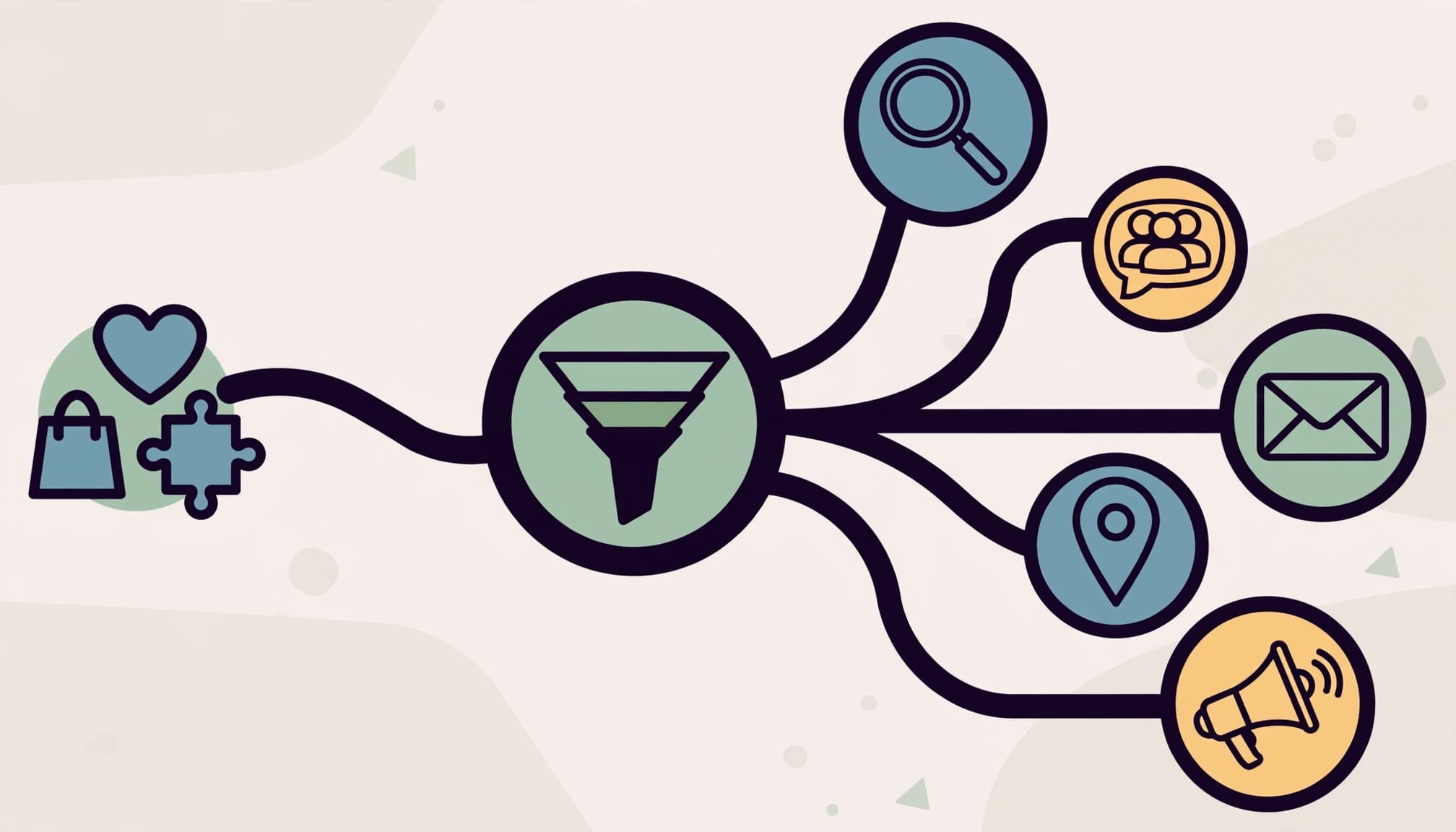
A digital marketing plan should match how customers discover and evaluate your offer, not how many accounts your business can open. I choose channels by weighing customer behavior against the team's capacity to publish, respond, and improve the work. A neglected profile can't do much for a business, no matter how polished it looked on launch day.
Match each channel to how customers find and choose you
Search and SEO fit customers who are already looking for a solution. Useful service pages and answers to common questions can build visibility over time, although SEO changes may take weeks or months to assess. For a business serving a specific area, accurate local listings can help nearby customers find basic details and consider the business.
Social media makes sense when your audience uses a particular platform and your team can share material worth following. It can help people discover your brand and get a feel for your offer, but posting everywhere just to keep accounts active is busywork with better lighting.
Email supports ongoing, direct communication with people who have chosen to hear from you. It can keep customers informed after an inquiry or purchase, while paid campaigns can put a message in front of a selected audience sooner and help test an offer. However, paid exposure depends on campaign settings and budget. When spending stops, the campaign no longer provides that paid reach. SEO and useful content can build lasting visibility, though neither guarantees traffic or results.
Start focused, then expand based on evidence
For most new businesses, I'd begin with one or two channels that fit the customer, the offer, and the team's actual week. A local service might prioritize local search and a focused paid campaign for quote requests. A business with customers who research before buying may start with search-friendly pages and email follow-up.
That focus gives a small team room to do the basics well: publish useful content, reply promptly, and connect inquiries to sales outcomes. Otherwise, five half-fed channels can produce thin posts and missed messages. Marketing starts to look busy while qualified leads slip through the cracks.
Before adding another channel, I review customer response and execution quality. Are inquiries a good fit? Can the team keep up with follow-up? Does the current channel support bookings or sales, rather than just clicks? I expand when the answers point to a real opportunity and we have capacity to act on it. That's how a channel mix becomes a working growth system, rather than a collection of abandoned campaigns.
How to Set a Marketing Budget That Fits a New Business
A useful marketing budget starts with what your business can sustain, not a percentage copied from a spreadsheet. I account for the full cost of marketing: paid media, software, content production, creative work, and the staff time needed to publish, respond, and follow up. If those costs sit in separate buckets, the budget can look smaller than the bill that eventually arrives.

The right amount depends on cash flow, profit margins, growth goals, and sales cycle. A business with a long decision process may need to invest in education and follow-up before sales appear. Meanwhile, a service business with limited capacity should account for the cost of serving new customers, not just attracting them. Marketing that fills the calendar beyond what you can deliver creates a different kind of problem.
Balance fast visibility with long-term growth
Paid campaigns can put an offer in front of potential customers quickly, which helps when you need launch visibility or want to test demand. However, that exposure depends on continued spending. Organic work, such as SEO, useful content, and email list building, usually takes longer to gain traction, but it can keep attracting attention after a campaign ends.
I match the mix to the goal and resources. If you need early leads and can handle them, a modest paid campaign may help. If cash is tight or your sales cycle is longer, invest in useful pages and content while building a smaller, focused ad test.
Microsoft's small-business marketing guidance offers a broad starting example: 70% to 80% for proven organic activity, 10% to 20% for paid campaigns, and 5% to 10% for testing. These ranges are not universal rules or India-specific benchmarks, and they don't add up to one fixed 100% allocation at every point in the range. Use them as a prompt for planning, then adjust them to your situation.
Protect room for learning and unexpected costs
I reserve a small amount for controlled tests and unexpected needs, such as a landing-page revision or a creative asset that requires outside help. Each test should answer a clear question, like whether a specific audience responds to an offer. Set a spending limit and a review date before launch; otherwise, "testing" can turn into random experiments with recurring charges.
Finally, keep the total spend at a level your cash flow can support, even if early results arrive slowly. A revenue-based budget can offer context once sales are steady, but it isn't a requirement, especially before launch. Set a limit, track what brings qualified customers, and increase spending only when the business can afford both acquisition and delivery.
How to Measure Results and Improve the Plan Over Time
A digital marketing plan gets smarter when real customer behavior replaces launch-day assumptions. I set up tracking before campaigns begin, then review the numbers that connect marketing to sales. Otherwise, the dashboard may look lively while the cash register remains remarkably unimpressed.

Track the actions that matter to revenue
Before spending on ads or publishing launch content, I define what counts as a conversion for the business and make sure the relevant tracking works. A conversion might be a completed purchase, a qualified form submission, a phone call from a potential customer, or an appointment booking. The right action depends on how you sell.
Then I focus reporting on a short list of outcome measures: qualified leads, conversion rate, cost per acquisition, sales, and repeat purchases when they apply. These figures help answer practical questions. Are the leads a good fit? Do website visitors become customers? How much does it cost to acquire a buyer, and do customers come back?
Impressions, clicks, and social engagement can help diagnose whether a campaign reaches people or earns attention. However, they are activity metrics, not proof of business impact. A high click count means little if visitors leave without taking a useful next step. I use those numbers to investigate performance, while judging success by the actions tied to revenue.
Keep reporting connected to decisions, not dashboard decoration. If leads arrive but few book, I might review the form, offer, or follow-up process. If sales come through but acquisition costs strain the margin, I might adjust targeting or spending. A simple report that prompts a clear action beats a dashboard with 40 charts and no next move.
Test one change at a time and give it enough time
When I test a campaign, I write down a clear hypothesis first: for example, "A shorter booking form will increase qualified appointments." Then I change one main variable, such as the form length, while keeping other major parts steady. If I change the audience, offer, landing page, and budget together, I can't tell which change affected the result.
Before the test starts, I choose one or two success measures, such as qualified appointments and cost per qualified lead. I also set a review date. That keeps me from declaring victory after one lucky afternoon or scrapping a solid idea before enough customers have had time to respond.
Google Ads recommends allowing many advertising experiments at least 4 to 6 weeks, and longer when conversion delays require it. That guidance applies to Google Ads experiments, not every channel or business. I use it as context, then account for sales cycle, traffic volume, and the time customers need to decide. After each test, I record what changed and what happened, so the next version of the plan has evidence behind it.
A Simple Pre-Launch Checklist, and Mistakes to Avoid
Before launch, I run through a short checklist to catch gaps while they're still easy to fix. A digital marketing plan should give you a clear route from customer interest to a real business result, with room to adjust when the evidence changes.
Confirm who you want to reach and make sure the offer addresses a problem they recognize.
Set one primary business goal, such as qualified leads, bookings, or sales.
Choose a small number of channels that match how those customers discover and evaluate your offer.
Set a manageable budget, including the time needed to create content and respond to leads.
Prepare the landing page and follow-up process before directing traffic there.
Install tracking for meaningful actions, then test that it records them correctly.
Choose a review schedule that fits the pace of your campaigns.

Prepare the customer journey before buying attention
I check the entire path a potential customer takes, from the first click to the first reply. Your landing page or business profile should explain the offer clearly and make one next step obvious, such as calling, booking, or submitting a form. Then I test every contact method on mobile and desktop. A broken form or an outdated phone number can turn paid attention into an expensive dead end.
Decide who handles inquiries and how quickly your business will respond. A lead that waits several days may contact someone else, so set a realistic response routine before launch. For form submissions, I also test the confirmation step and tracking. In Google Analytics 4, a completed lead action can be marked as a key event and checked in the Realtime report.
Review the plan on a regular schedule
Match the review rhythm to campaign pace. For an active paid test, I might check delivery and tracking often, then assess results on a planned review date. For slower SEO or content work, I look at trends over a longer stretch. Either way, I ask three useful questions: Are we attracting the right customers? Where are people dropping off? What should change next?
A few early mistakes can muddy those answers. Launching before the offer is clear, picking channels because they're popular, measuring traffic alone, spending without a test question, or abandoning a channel after a small early wobble all make learning harder. I change course when the pattern supports it, not because one afternoon looked gloomy or a single metric had a tantrum. Keep the plan as a working guide, then update it when customer behavior, budget, or business capacity changes.
Frequently Asked Questions
A pre-launch plan raises practical questions that don't always fit neatly into the main strategy. Here are a few I hear from new business owners as they prepare to put their marketing into action.

Should my website be live before I start marketing?
If your campaign sends people to a website, the relevant page should be ready first. I check that it explains the offer, works on mobile, and gives visitors a clear next step, such as booking or contacting you. You can start building awareness earlier, but sending paid traffic to an unfinished page wastes attention and budget.
What if I have no customer data yet?
Start with conversations, not guesswork dressed up as certainty. Ask potential customers how they currently handle the problem, what they look for in a solution, and what might stop them from buying. I treat those early answers as useful clues, then revise the plan when actual inquiries and sales reveal what people do.
Does a digital marketing plan need to be a long document?
No. A useful plan can fit on a page if it captures the audience, offer, primary goal, chosen channels, budget, and measures of success. I keep the format simple enough to revisit, because a plan that gathers dust in a shared drive helps nobody.
Should I hire a marketer before launch?
That depends on the work you need and the time or skills available in-house. If you can manage the basics, such as clear messaging, a functional landing page, and lead follow-up, you may not need outside help immediately. When you do bring in support, I recommend defining the business outcome and scope first, so everyone knows what the work should accomplish.
Can I start marketing before my product or service is perfect?
You can test interest before every detail is polished, as long as you describe the offer honestly and can deliver what you promise. For example, customer interviews or a small waitlist campaign can help you learn which benefits matter most. I avoid taking money or making firm claims until the offer and delivery process are ready.
Conclusion
A digital marketing plan helps you spend with intent, reach the people most likely to need your offer, and judge progress by measurable business results. I've found that connecting marketing choices to actual outcomes keeps activity from becoming a pile of disconnected campaigns.
Start with a clear customer, a focused offer, one main goal, and a small set of suitable channels. Then use real results to adjust the plan. That gives your new business a confident first step, with room to learn before you spend bigger.